
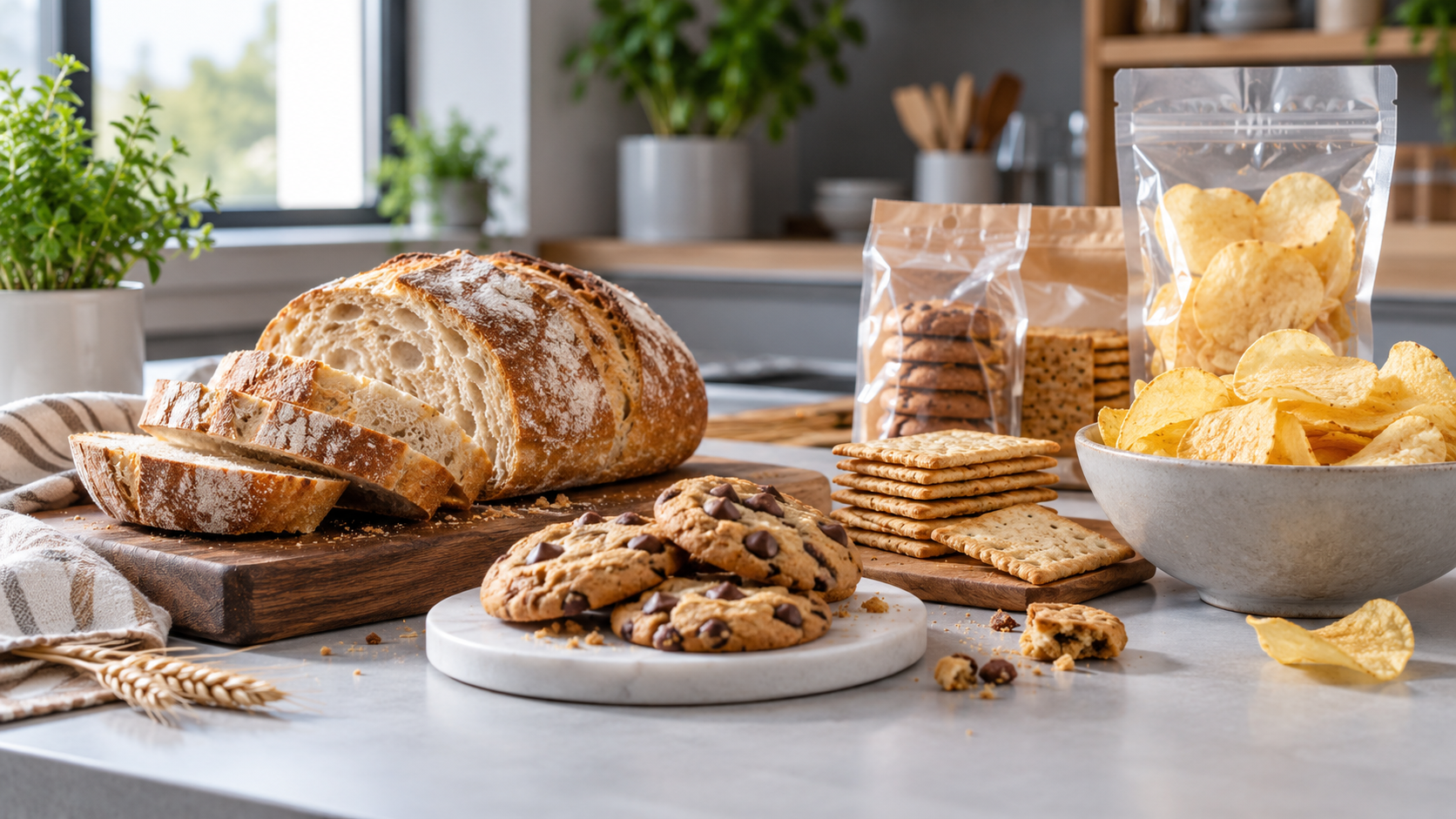
WATER ACTIVITY IN BAKERY AND SNACK FOODS: SHELF LIFE, TEXTURE, MOLD CONTROL AND PACKAGING
A soft cookie should stay soft. A cracker should stay crisp. Bread should remain fresh without developing mold. A filled cake should keep its individual textures without moisture moving from one component to another.
These products are very different — but they share one important parameter:
water activity (aw).
Water activity describes the energy state of water in a food and helps determine how that water can influence microbial growth, texture, moisture migration and chemical stability. For manufacturers of bread, cakes, cookies, biscuits, crackers, chips, cereal snacks and filled bakery products, measuring water activity can help answer five practical questions:
- Can microorganisms grow in the product?
- Will a crisp product remain crisp or become soft?
- Will a soft product remain soft or become hard and dry?
- Will moisture migrate between different components?
- Are we removing more water during baking or drying than the product actually requires?
The important point is that there is no universal “best” water activity for bakery and snack products. The optimum aw depends on how the specific product is supposed to behave and what is most likely to end its shelf life.
Not all bakery and snack products fail in the same way
Before setting a water activity specification, it is important to understand the type of product being manufactured. Broadly, bakery and snack products can be divided into different stability regions.
| Product type | Typical water activity region | Common shelf-life challenges |
|---|---|---|
| Fresh bread, cakes and other moist bakery products | Often above 0.85 aw | Mold, microbial spoilage, staling, moisture redistribution |
| Soft cookies, bars and intermediate-moisture bakery products | Often approximately 0.60–0.85 aw | Mold and yeast, texture change, moisture migration |
| Crackers, biscuits, chips and other dry crispy snacks | Often below 0.60 aw | Loss of crispness, moisture uptake, oxidation |
| Filled or multi-component products | Depends on each component | Moisture migration, local texture changes, localized microbial risk |
Table 1: These ranges are only general orientation values — not universal specifications.
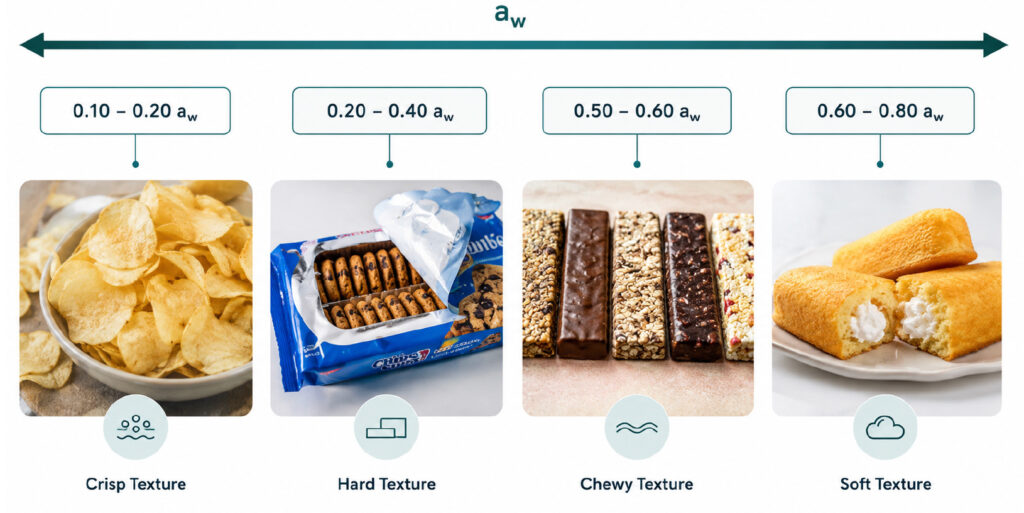
Figure 1. Examples of baked snacks covering the range of water activity and the expected texture profile for each snack
What is water activity?
Water activity describes the thermodynamic energy state of water in a product.
It is defined as:
aw = p / p₀
where:
p = vapor pressure of water above the product
p₀ = vapor pressure of pure water at the same temperature
Pure water has an aw close to: 1.00
Water activity is also related to equilibrium relative humidity:
ERH (%) = aw × 100
A food at 0.50 aw therefore tends toward equilibrium with an atmosphere of approximately 50% relative humidity at the same temperature.
This is why water activity is sometimes described as “free water.” However, that expression can be misleading. Water activity does not measure a quantity of free water. It measures how energetically available the water is within the product matrix.
The science behind water activity: chemical potential and Gibbs free energy
Water activity is rooted in thermodynamics. The chemical potential of water — its partial molar Gibbs free energy — changes as water interacts with proteins, starches, sugars, salts and other components of a food.
The relationship can be expressed as:
Δμw = RT ln(aw)
where:
Δμw = difference in the chemical potential of water
R = universal gas constant
T = absolute temperature
aw = water activity
This explains an important principle:
The amount of water in a food and the energy state of that water are not the same thing.
Water molecules interact differently depending on the product composition and physical structure. That is why water activity can provide information about stability that moisture content alone cannot.
Water activity vs. moisture content in bakery products
Moisture content answers: How much water does the product contain?
Water activity answers: How available is that water?
This distinction is especially important in bakery products. Bread can contain a large amount of water and have relatively high water activity. A cracker can contain very little water and have very low water activity. A soft cookie may contain substantially more moisture than a crisp biscuit while still being formulated to achieve the required microbial stability.
There is therefore no universal conversion between moisture content and water activity.
Their relationship is described by a moisture sorption isotherm, and that relationship is unique to the formulation and temperature.
Changing:
- sugar
- salt
- starch
- protein
- fat
- fibers
- humectants
- recipe composition
can change the amount of moisture associated with a given aw. This is why transferring a moisture-content specification from one product to another can be misleading. Two products with the same moisture percentage can have different water activities. And two products at the same aw can contain very different amounts of total water.
Water activity and microbial stability in bakery products
Microorganisms require available water to grow. As water activity decreases, microbial growth becomes increasingly restricted. Different organisms have different minimum aw requirements, which means water activity can be used to determine which classes of microorganisms are capable of proliferation under defined conditions.
| Microorganism | aw limit | Microorganism | aw limit |
| Clostridium botulinum E | 0.97 | Penicillum expansum | 0.83 |
| Pseudomonas fluorescens | 0.97 | Penicillum islandicum | 0.83 |
| Escherichia coli | 0.95 | Debarymoces hansenii | 0.83 |
| Clostridium perfringens | 0.95 | Aspergillus fumigatus | 0.82 |
| Salmonella spp. | 0.95 | Penicillum cyclopium | 0.81 |
| Clostridium botulinum A B | 0.94 | Saccharomyces bailii | 0.8 |
| Vibrio parahaemoliticus | 0.94 | Penicillum martensii | 0.79 |
| Bacillus cereus | 0.93 | Aspergillus niger | 0.77 |
| Rhizopus nigricans | 0.93 | Aspergillus ochraceous | 0.77 |
| Listeria monocytogenes | 0.92 | Aspergillus restrictus | 0.75 |
| Bacillus subtilis | 0.91 | Aspergillus candidus | 0.75 |
| Staphylococcus aureus (anaerobic) | 0.9 | Eurotium chevalieri | 0.71 |
| Saccharomyces cerevisiae | 0.9 | Eurotium amstelodami | 0.7 |
| Candida | 0.88 | Zygosaccharomyces rouxii | 0.62 |
| Staphylococcus aureus (aerobic) | 0.86 | Monascus bisporus | 0.61 |
Table 2. Water activity lower limits for growth for common spoilage organisms.
A useful general framework is:
Above 0.85 aw
Many moist foods require refrigeration or another validated hurdle to control pathogen growth. The FDA uses 0.85 aw as an important regulatory boundary in several contexts. However, 0.85 aw should not be interpreted as a universal safety specification for every bakery product. PH, heat treatment, preservatives, packaging and other factors also need to be considered.
0.60–0.85 aw
This is commonly described as the intermediate-moisture region. Growth of many pathogenic bacteria is restricted, but yeasts and molds can remain important shelf-life concerns. Many soft bakery products are designed in or near this region because they need to retain enough moisture to remain soft.
Below 0.60 aw
Microbial proliferation is generally considered unable to occur. Crackers, biscuits, chips and other very dry foods frequently fall into this category. But there is one crucial distinction:
No microbial growth does not mean no microorganisms are present.
Low water activity prevents growth — it does not necessarily kill pathogens
This distinction is important for low-moisture bakery and snack foods. When aw becomes too low for an organism to grow, the organism does not necessarily die. Pathogens such as Salmonella can survive for extended periods in dry food environments.
Consequently, a cracker or low-aw snack that cannot support microbial proliferation still needs:
- safe raw materials
- hygienic manufacturing
- validated processing where required
- prevention of post-process contamination
Water activity is therefore a stability control, not a substitute for appropriate food-safety controls. This is an important distinction when interpreting a low aw result.
Why mold is often the real shelf-life limit in soft bakery products
For many ambient-stable cakes, muffins, soft cookies and similar products, visible mold rather than pathogenic bacterial growth is the practical end of shelf life. This creates a difficult formulation challenge.
Consumers want the product to remain: soft, moist and fresh
while the manufacturer needs conditions that limit: mold and yeast growth.
Simply removing more water may reduce microbial risk, but eventually the texture becomes unacceptable. The solution is therefore not necessarily to achieve the lowest possible aw. Instead, manufacturers can combine water activity with additional hurdles such as:
- pH control
- preservatives
- humectants
- appropriate heat treatment
- hygienic cooling and handling
- suitable packaging
- modified atmosphere where appropriate
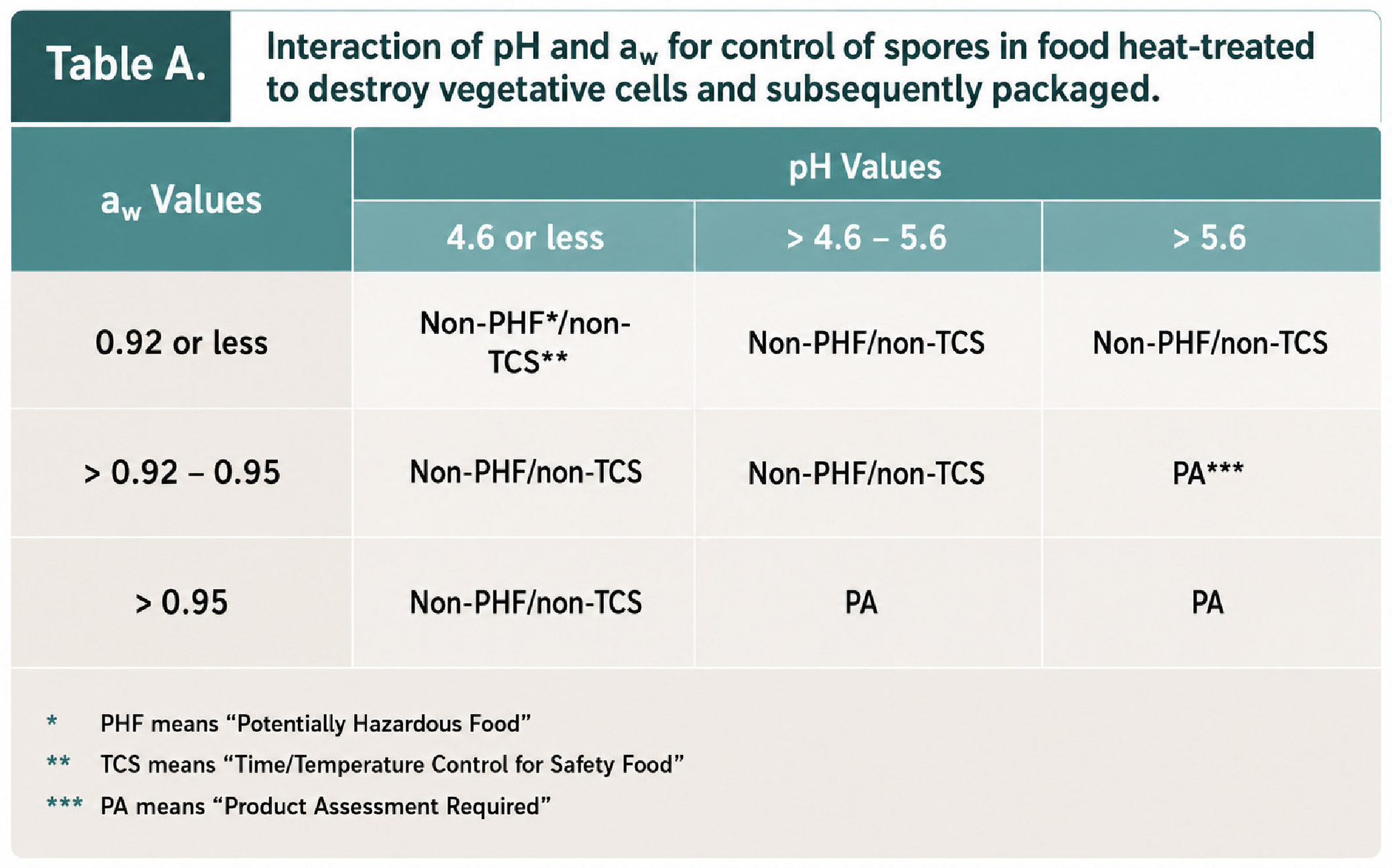
Table 3: Table A taken from 2017 food code definition for potentially hazardous foods
The product can then be designed around a validated water activity range rather than an arbitrary maximum. This is the principle of hurdle technology. Multiple smaller barriers can work together to create stability while maintaining the desired product quality.
Water activity and crispness: when does a snack become soggy?
For crackers, biscuits, potato chips and many extruded snacks, microbial growth is usually not the first mechanism that ends shelf life.
The consumer notices something else first: the product is no longer crisp.
Dry crispy foods normally exist in a rigid, glassy physical state. As they absorb water, water acts as a plasticizer and increases molecular mobility. Eventually, the product can move toward a more rubbery state and lose the mechanical properties associated with crispness. The critical point is highly product-specific. It depends on:
- formulation
- structure
- temperature
- processing
- ingredient composition
This is why a single universal “crispness aw” does not exist. Instead, each product has a critical water activity above which sensory quality begins to deteriorate rapidly.
Scientific evidence: critical water activity and cookie crispness
Research by Brady P. Carter and colleagues specifically investigated the relationship between critical water activity and the crispness of low-moisture cookies. The work demonstrated that changes in dynamic moisture sorption behavior could be used to identify a critical water activity (RHc) associated with an abrupt loss of desirable crispness.
This is particularly useful because it turns a subjective consumer characteristic — “Is this cookie still crispy?” — into a measurable product specification. Instead of selecting a water activity limit arbitrarily, manufacturers can combine:
water activity + sorption behavior + sensory or texture data
to identify the point where product quality becomes unacceptable. This creates a scientifically justified specification directly connected to consumer perception.
Soft products have the opposite challenge
The relationship works in the other direction for soft bakery products. A soft cookie, brownie or snack bar can become unacceptable if it loses too much water. The product may become:
- hard
- dry
- tough
- brittle
- stale
The ideal water activity is therefore often a window rather than a single maximum.
Too high
The product may become susceptible to mold, yeast or other stability problems.
Too low
The product may become excessively hard or dry.
Inside the target range
The manufacturer can balance: microbial stability + sensory quality + process consistency + yield
Bread staling is more complicated than simply losing moisture
Bread deserves special consideration. A common simplification is to assume that bread becomes stale simply because it dries out. That is not scientifically complete. Bread staling involves several interacting mechanisms, particularly:
- amylopectin retrogradation
- structural changes in starch
- redistribution of water between starch and gluten
- moisture migration between crumb and crust
- changes in molecular mobility
This explains why bread can become firmer even when the package prevents large overall moisture losses. Water activity remains important, but staling cannot be explained by aw alone. This distinction matters when diagnosing shelf-life problems.
If bread becomes firm, the solution is not automatically better moisture-barrier packaging. The underlying failure mechanism needs to be understood first.
Crumb-to-crust moisture migration
Fresh bread also illustrates another important principle of water activity. The crumb and crust leave the oven in very different states. The crust is relatively dry and crisp. The crumb contains much more available water.
After baking, this difference creates a thermodynamic driving force for moisture redistribution. Water moves toward the region of lower water activity. As moisture moves from crumb toward crust:
- the crust becomes less crisp
- the crumb changes
- the sensory profile evolves
The same principle affects many other multi-component foods.
Moisture migration in filled bakery products
Consider:
- a cream-filled biscuit
- a cake with icing
- a cereal bar containing dried fruit
- a wafer with a soft filling
- a cookie with caramel
- a chocolate-coated bakery product
Each component may contain a very different percentage of moisture. The percentage of moisture does not determine the direction of migration. The water activity difference does.
Water moves from the component with higher aw toward the component with lower aw until the system approaches equilibrium. This can cause:
- crisp components to soften
- soft components to dry out
- fillings to change viscosity
- coatings to lose their intended properties
- localized microbial stability to change
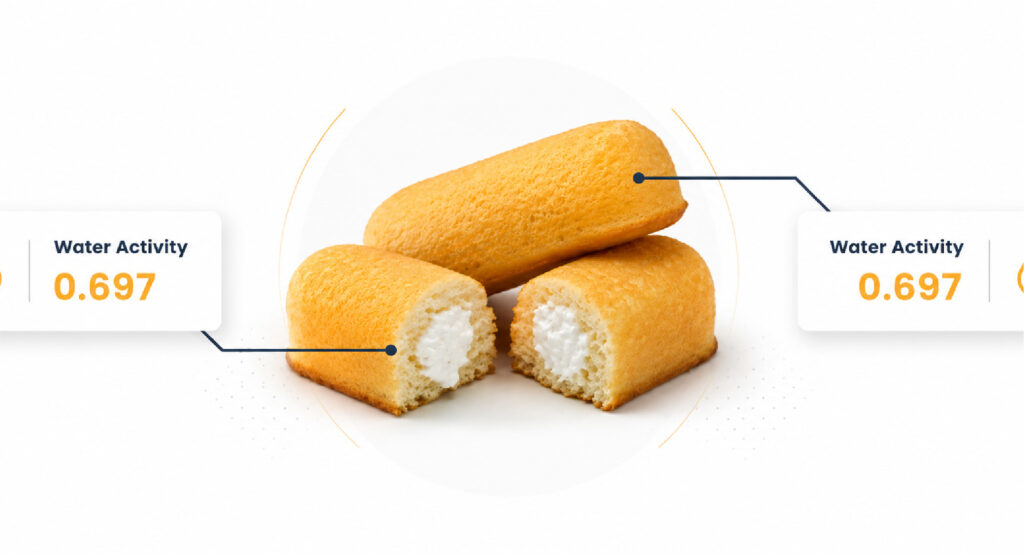
Figure 2. Diagram showing that to avoid moisture migration, the water activity of multi-component snack cakes need to match, regardless of their moisture content.
Do all components need exactly the same water activity?
Matching component water activities is one of the most effective ways to reduce the thermodynamic driving force for moisture migration. But it is not the only strategy.
In real products, exactly matching the aw of every component may not be practical or may compromise sensory quality. Other approaches can include:
- edible moisture barriers
- fat or chocolate layers
- reducing direct contact between components
- changing formulation
- modifying viscosity
- optimizing component geometry
- selecting appropriate packaging
The objective is to understand the water activity gradient and then control the rate and consequence of moisture movement. This is more useful than simply measuring the total moisture content of the finished product.
Water activity and lipid oxidation
Low water activity protects against microbial growth. But it does not guarantee unlimited shelf life. This is particularly important for:
- potato chips
- crackers containing fats
- fried snacks
- nuts
- seeds
- high-fat bakery products
For these products, lipid oxidation can become the dominant mode of failure. Oxidation produces undesirable:
- flavors
- odors
- color changes
- nutritional deterioration
The relationship between water activity and lipid oxidation is complex and product-dependent. Reaction rates often do not simply decrease continuously as aw falls. Very dry systems can still be highly susceptible to oxidation. Therefore: Lower aw is not automatically better for chemical shelf life.
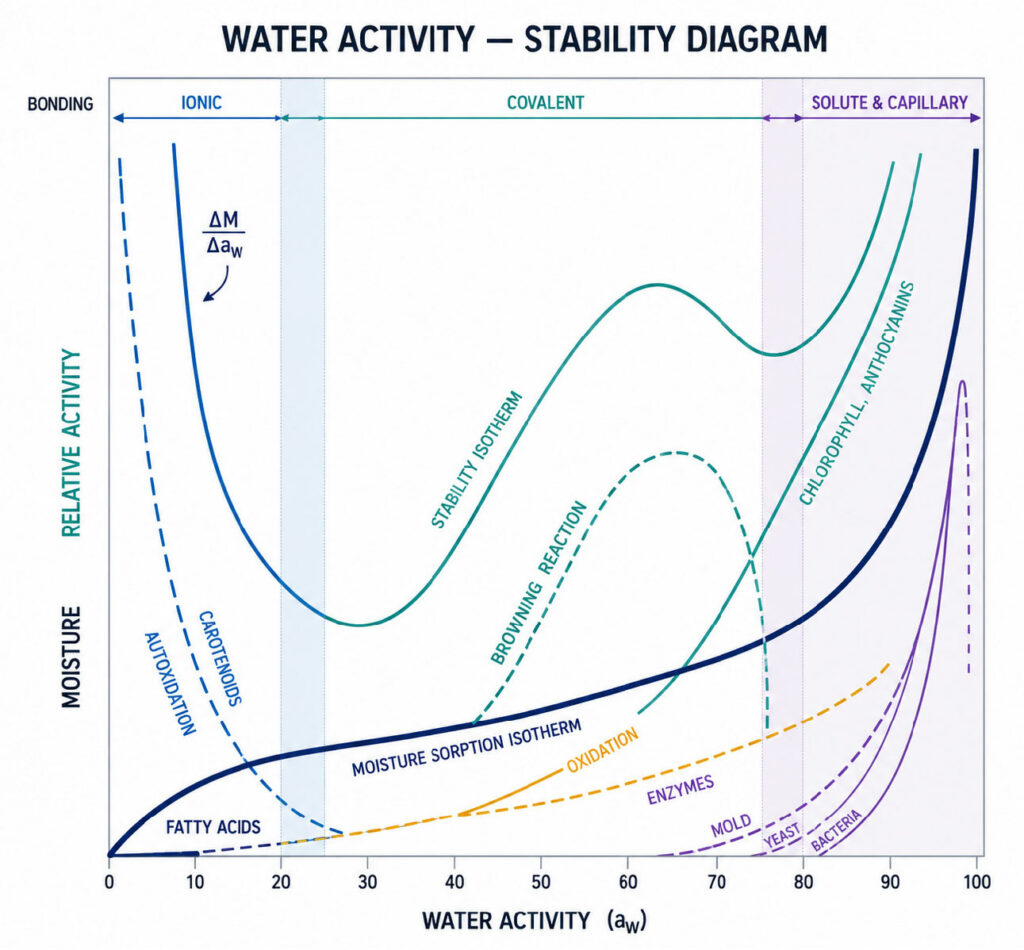
Figure 3. The impact of water activity on various stability factors in food. Oxidation increases at lower aw levels.
The appropriate strategy may involve controlling:
- oxygen exposure
- antioxidant systems
- light
- temperature
- packaging oxygen transmission rate
- headspace atmosphere
rather than further reducing water activity.
A moisture problem and an oxygen problem require different packaging
This distinction has very practical consequences. If a cracker becomes soft because it absorbs moisture, the primary packaging requirement is a strong water-vapor barrier. If potato chips become rancid because of lipid oxidation, the manufacturer also needs strong oxygen control. These are not identical packaging problems.
For moisture protection, important considerations include: WVTR — Water Vapor Transmission Rate
For oxidation protection: OTR — Oxygen Transmission Rate
Nitrogen flushing can reduce oxygen in the initial package headspace, but it does not automatically prevent future moisture ingress or oxygen transmission through an inadequate film. Packaging should therefore be selected based on the dominant shelf-life failure mechanism of the product. Water activity helps identify the moisture-related part of that problem.
From water activity to packaging shelf life
Once the critical water activity of a product is known, packaging decisions can become more quantitative. Imagine a cracker that leaves production at a low aw but loses acceptable crispness once it exceeds its experimentally determined critical aw.
The manufacturer now knows:
Starting aw → critical aw → maximum allowable moisture uptake
The product’s moisture sorption isotherm can then be used to relate this aw change to the amount of water the product can absorb. Combined with:
- package surface area
- WVTR
- external humidity
- storage temperature
- product mass
this information can support prediction of how long the product can remain below its critical aw. This turns packaging selection from:
“We need a good moisture barrier.”
into:
“We need a package capable of maintaining this product below its critical aw for the required shelf life.”
That is a much stronger engineering specification.
Formulation: retain moisture without increasing aw too far
Soft bakery products create another opportunity. Removing water is not the only way to reduce water activity. Ingredients that interact strongly with water can lower its chemical potential.
Examples may include:
- sugars
- salts
- polyols and permitted humectants
- other formulation components
This creates an important formulation principle; Moisture content can remain relatively high while water activity is reduced. For products such as soft cookies and intermediate-moisture cakes, this can help achieve:
- soft texture
- higher product mass
- desired eating quality
- improved microbial stability
The exact formulation must, of course, be validated for the specific product.
Why overbaking can cost money
Bakery products are generally manufactured and sold on a mass basis. Water contributes to finished-product weight. If a product is baked significantly beyond the point required to reach its validated target aw and texture, the manufacturer may be removing product mass unnecessarily.
Potential consequences include:
- reduced yield
- harder or drier texture
- increased energy consumption
- longer processing time
- reduced line capacity
- greater batch variability
This does not mean that every bakery product should contain more water. A cracker still needs to be sufficiently dry to remain crisp. But once the appropriate aw range has been scientifically established, further drying may provide no additional value.
Set a target range, not just a maximum
An effective water activity specification often contains more than one limit. For a soft bakery product:
Upper boundary, may be determined by microbial stability.
Lower boundary, may be determined by hardness, sensory quality or yield.
For a dry crispy snack: Upper boundary may instead be the critical aw for crispness loss. The resulting production target sits safely inside these boundaries. Conceptually:
FAILURE LIMIT
↓
PROCESS MARGIN
↓
TARGET WATER ACTIVITY RANGE
↓
QUALITY / PROCESS LIMIT
This creates a useful operational specification rather than simply a pass/fail laboratory number.
Determine what actually ends shelf life
Water activity is powerful because it helps identify the relevant modes of failure. But aw itself is not the shelf life. A water activity measurement does not tell you: “This product will last exactly six months.”
Instead, it helps determine which reactions or changes can occur, allowing the appropriate failure mechanism to be studied. For example:
Soft cake
Likely concern: microbial spoilage or mold. Track:
- mold growth
- microbial counts
- sensory acceptance
Crisp cracker
Likely concern: moisture uptake and loss of crispness. Track:
- water activity
- texture
- sensory crispness
Potato chip
Likely concern: lipid oxidation and moisture uptake. Track:
- oxidation markers
- sensory rancidity
- aw
- texture
Bread
Likely concerns: mold and staling. Track:
- mold
- crumb firmness
- sensory freshness
- structural changes
Shelf-life testing becomes much more efficient when the likely failure mechanism is known in advance.
Water activity and temperature: shelf life is dynamic
Shelf life is affected not only by water activity but also by temperature. Temperature influences:
- reaction rates
- molecular mobility
- moisture sorption behavior
- microbial growth
- packaging permeability
A product stored at 20°C may therefore not behave identically at 35°C, even when its initial water activity is the same. For chemical reactions, kinetic modeling can be used to evaluate the combined influence of temperature and water activity. Advanced approaches such as Hygrothermal Time modeling incorporate both variables into reaction-rate predictions. This can be particularly useful for accelerated shelf-life studies where chemical degradation rather than microbial growth is the limiting mechanism. (Therefore, check out our latest Simplified Shelf Life Tool, reach out to us sales@novasina.ch)
The key principle is: Do not validate only the product. Validate the product under the conditions it will actually experience.
A better development strategy for bakery and snacks
Water activity becomes most valuable when it is integrated into product development rather than measured only at final QC. A strong approach is:
1. Identify the intended consumer experience
Should the product be:
- crisp
- crunchy
- soft
- chewy
- moist
- tender?
2. Identify the likely failure mode
Is the greatest risk:
- mold?
- microbial growth?
- loss of crispness?
- hardening?
- staling?
- oxidation?
- moisture migration?
3. Determine the relevant critical aw
Use microbiological data, sensory testing, texture measurements, sorption studies or shelf-life testing depending on the failure mode.
4. Establish a process margin
Routine production should not operate directly on the failure boundary. Define a target range that considers normal process variation.
5. Optimize formulation and processing
Determine how:
- baking time
- temperature
- recipe
- humectants
- drying
- cooling
influence final aw.
6. Design the packaging around the actual risk
Determine whether the priority is:
- moisture barrier
- oxygen barrier
- modified atmosphere
- component separation
- a combination of these
7. Validate shelf life
Confirm that the product remains within acceptable safety and quality limits throughout the intended distribution period.
8. Monitor routine production
Use water activity as a quantitative QC parameter to detect process drift before it becomes a customer complaint.
From QC measurement to process optimization
There are several levels at which bakery manufacturers can use water activity.
Final-product QC
Does the batch meet specification?
Process monitoring
How do baking and cooling affect aw?
Product development
Which formulation gives the desired combination of aw, moisture and texture?
Shelf-life development
At what aw does the important mode of failure begin?
Packaging optimization
How much moisture transfer can the product tolerate?
Yield optimization
Can the product retain more moisture while remaining inside its validated target range? At this level, water activity is no longer simply a laboratory test.
It becomes a tool connecting:
R&D + Quality + Production + Packaging + Commercial Performance
Water activity measurement and ISO 18787
Water activity measurement in food is standardized internationally. ISO 18787:2017 — Foodstuffs — Determination of water activity specifies basic principles and requirements for aw determination in foods and animal feeds.
ISO 18787 therefore provides an internationally recognized framework for water activity measurement. For routine bakery and snack measurements, representative sampling, consistent sample handling and temperature control remain important.
Multi-component products require particular care because measuring the complete product can hide differences between individual components. For detailed recommendations, see the Novasina Water Activity Sample Preparation Guide.
The key takeaway
Bakery and snack products do not all need the same water activity. A fresh bread, soft cookie, cream-filled cake and potato chip can have completely different aw values — and completely different reasons for controlling them.
- For soft bakery products, that may mean balancing mold stability against softness.
- For crackers and chips, it may mean staying below the critical aw where crispness is lost.
- For bread, it means understanding microbial stability together with staling and moisture redistribution.
- For filled products, it means controlling water activity gradients between components.
- For high-fat snacks, it means recognizing that microbial stability does not prevent oxidative rancidity.
When these relationships are understood, water activity becomes much more than a QC measurement. It becomes a tool for designing: safer products, longer shelf life, better texture, more effective packaging and more efficient production.
Frequently Asked Questions About Water Activity in Bakery and Snack Foods
Why is water activity important in bakery products?
Water activity indicates how energetically available water is inside a product. It influences microbial growth, texture, moisture migration and many chemical or physical changes that can determine bakery shelf life.
What is the difference between water activity and moisture content in baked goods?
Moisture content measures the total amount of water present. Water activity measures the energy state of that water. Because ingredients such as sugar, salt, starch and proteins interact with water differently, two products with the same moisture content can have different water activities.
What water activity prevents microbial growth?
The minimum growth requirement depends on the microorganism. Below approximately 0.60 aw, microbial proliferation is generally considered unable to occur. However, microorganisms can survive without growing, so low aw should not be interpreted as a kill step.
Is 0.85 aw the safe limit for bakery products?
0.85 aw is an important FDA regulatory boundary in several food-safety contexts, but it is not a universal specification for every bakery product. pH, processing, preservatives, packaging and other hurdles can affect product safety and shelf stability. The appropriate limits should be validated for the specific product.
Why do crackers and chips become soft?
Dry crispy products absorb moisture when exposed to an environment or component with higher water activity. As water increases molecular mobility and plasticizes the product structure, crispness can eventually be lost.
What is critical water activity?
Critical water activity is the aw at which an important product property begins changing rapidly or becomes unacceptable. For a crispy snack, this can be the point where crispness is lost. Critical aw is product-specific.
Does lower water activity always mean better shelf life?
No. Very low aw prevents microbial growth, but other failure mechanisms can dominate. High-fat snacks, for example, can still undergo lipid oxidation, while excessive drying can make bakery products too hard or reduce manufacturing yield.
Does water activity cause bread staling?
Water activity and moisture redistribution influence bread quality, but bread staling is more complex. Amylopectin retrogradation, starch restructuring and redistribution of water between components also contribute significantly to crumb firming.
How can water activity help with packaging selection?
Once the critical aw and moisture sorption behavior of a product are known, manufacturers can estimate how much moisture gain or loss the product can tolerate. This can help specify the required water-vapor barrier of the package. Products susceptible to oxidation may additionally require oxygen-barrier packaging or modified-atmosphere strategies.
How can moisture migration be prevented in filled bakery products?
Reducing differences in water activity between components reduces the driving force for moisture migration. Where matching aw is not practical, other strategies can include edible barriers, changes in formulation, viscosity, product architecture and suitable packaging.
Read the scientific application note by Dr. Brady Carter, global water activity expert, for a detailed look at the underlying science and practical implications.
Scientific and Regulatory References
- ISO 18787:2017. Foodstuffs — Determination of water activity. International Organization for Standardization.
- U.S. Food and Drug Administration. Water Activity (aw) in Foods. Inspection Technical Guide.
- U.S. Food and Drug Administration. Evaluation and Definition of Potentially Hazardous Foods.
- Smith, J.P. et al. Shelf Life and Safety Concerns of Bakery Products — A Review. Critical Reviews in Food Science and Nutrition.
- Katz, E.E. & Labuza, T.P. Effect of Water Activity on the Sensory Crispness and Mechanical Deformation of Snack Food Products. Journal of Food Science.
- Carter, B.P., Galloway, M.T., Campbell, G.S. & Carter, A.H. The Critical Water Activity from Dynamic Dewpoint Isotherms as an Indicator of Crispness in Low Moisture Cookies. Journal of Food Measurement and Characterization, 2015.
- Carter, B.P. Investigations into Practical Applications for the Critical Water Activity from Dynamic Dewpoint Isotherms. PhD Dissertation, Washington State University, 2015.
- Gray, J.A. & BeMiller, J.N. Bread Staling: Molecular Basis and Control. Comprehensive Reviews in Food Science and Food Safety.
- Van Rooyen, J. et al. Wheat Starch Structure–Function Relationship in Breadmaking: A Review. Comprehensive Reviews in Food Science and Food Safety, 2023.
- Sanyoto, G.J. et al. Moisture Migration and Its Prevention in Multi-Domain Bakery Products: A Review. Food Reviews International.
- Bell, L.N. & Labuza, T.P. Research on water activity and reaction kinetics in low-moisture food systems.
Get in touch and learn more about your specific application and its possibilities! sales@novasina.ch


