
UNDERSTANDING AND CONTROLLING WATER ACTIVITY IN CHOCOLATE CONFECTIONS
The global chocolate industry, valued at over $129 billion, is a dynamic and influential sector recognized not only for its economic impact but also for its cultural significance and continuous innovation. From artisanal craft producers to multinational confectionery giants, chocolate manufacturing encompasses a wide array of processes, ingredients, and product formats. As consumer demand rises for premium quality, clean-label formulations, reduced sugar content, and longer shelf life, manufacturers face growing pressure to optimize every aspect of production. Among the many factors affecting chocolate quality, water activity plays a crucial role in ensuring product stability, safety, and sensory appeal, particularly in complex formulations that include inclusions, fillings, or layered structures.
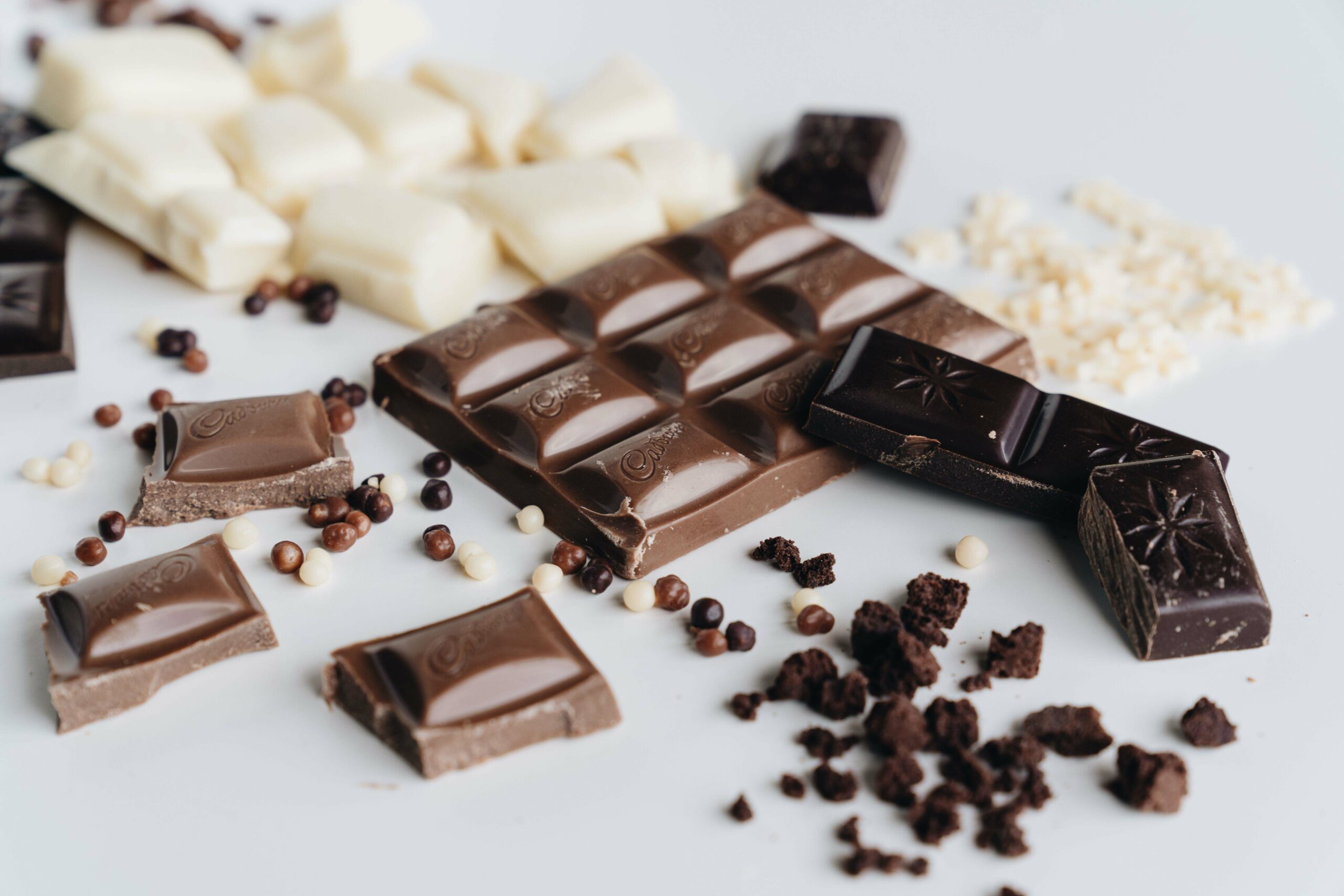
Chocolate comes in many types and is often mixed with other ingredients to create unique confections. Chocolate is derived from the chocolate liquor of cacao beans and is rich in flavanols which act as natural preservatives (1). The chocolate itself can be categorized based on the form and level of Cocoa powder
- Cocoa Powder – ground from roasted cacao beans with not additional additives, the powder has a bitter flavor and extended shelf-life of up to 3 years.
- Baking Chocolate – pure solid chocolate liquor with no added sugar or milk with a shelf-life of about 2 years.
- Dark Chocolate – sweetened chocolate with varying but high levels of cacao. The higher the level of cacao, the more bitter the flavor and the longer the shelf-life.
- Milk Chocolate – contains about 10% chocolate liquor plus milk and sugar with a shelf-life of about a year depending on the form.
- White Chocolate – Does not contain any chocolate solids, just cocoa butter combined with milk and sugar resulting in a shorter shelf-life at around 6 months.
- Chocolate with Infused Liquor – chocolate that is mixed with different types of liquors to give distinct flavors. Shelf-life of this product is typically short at around 2 months or less.
Water Activity Basics
Water activity is defined as the energy status of water in a system and is rooted in the fundamental laws of thermodynamics through Gibb’s free energy equation. It represents the relative chemical potential energy of water as dictated by the surface, colligative, and capillary interactions in a matrix. As water interacts with other molecules through various interactions, a portion of the energy held in the bonds of the water molecule is transferred to the interaction, thereby lowering the energy of the water molecule itself. The more interactions provided to water by the product ingredients, the lower the energy of water will become. This lowering of the energy of water also reduces its capability to escape into the vapor phase causing a reduction in vapor pressure. A water activity of 0.50 indicates that the water in the product has 50% of the energy that pure water would have at the same temperature. The lower the water activity, the less the water in the system behaves like pure water. Notice that the definition provided here never mentions the term ‘free water’ as this term is often mistakenly used to define water activity but has no scientific meaning.
Water Activity Measurments
For chocolate products, water activity is measured by equilibrating the liquid phase water in the sample with the vapor phase water in the headspace of a closed chamber and measuring the Equilibrium Relative Humidity (ERH) in the headspace using a sensor. The equilibrium relative humidity (water activity) can be determined using a resistive electrolytic sensor, a chilled mirror sensor, a tunable diode laser, or a capacitive hygroscopic polymer sensor. Instruments from Novasina, like the Labmaster NEO, utilize a resistive electrolytic sensor to determine the ERH. Changes in ERH are tracked by changes in the electrical resistance of the electrolyte sensor.
Chocolate confections typically do not contain volatiles – except in certain liquor-based formulations – so volatile filters are generally not required during water activity testing. However, a key challenge in measuring the water activity of chocolate products is the extended test time. Due to their high fat content, chocolate confections require longer equilibration periods, as the movement of high-energy water molecules into the vapor phase occurs more slowly. Taking readings before true equilibrium is reached, can result in inaccurate measurements, potentially compromising product safety and quality.
Equilibrium in water activity instrumentation is usually determined by the rate of change in water activity reaching a predefined threshold. The stricter this threshold, the greater the confidence in capturing the true water activity value, but this also increases the test duration. Some instruments attempt to shorten test times by using a less stringent default end-of-test setting, which may not be adjustable by the user. Novasina prioritizes the integrity of water activity testing and therefore allows users to set their preferred level of stringency for the end-of-test criteria. Users also have the option to follow the ISO 18787 standard method for water activity testing, ensuring consistency and reliability in their measurements (https://www.iso.org/standard/63379.html).
To demonstrate the potential differences resulting from various end-of-test (stability) settings, Novasina scientists conducted water activity tests on a range of products using both the less stringent Fast Stability setting and the more stringent Slow Stability setting on the Novasina LabMaster NEO (see Table 1). The Fast setting is designed to deliver quicker results by requiring that consecutive water activity readings differ by no more than 0.001 aw for 2 minutes. In contrast, the Slow setting ensures a more robust equilibrium by requiring the same level of stability over a 6-minute period.

While the Fast setting can significantly reduce test time, it may come at the expense of accuracy. If the results obtained using the Fast setting differ from those using the Slow setting by less than 0.01 aw, it is generally acceptable to use the Fast setting to expedite testing. However, for critical applications where precision is paramount, the Slow setting provides greater confidence in capturing the true water activity value.
Using a less stringent end-of-test setting should never be done without first evaluating the potential difference in results, something only possible if the instrument allows users to adjust these settings. Novasina recommends that when beginning water activity testing for a new product, users should first run the test using the Fast Stability setting. Then, without opening the lid, leave the sample in the instrument for up to an hour. During this time, the LabMaster NEO continues to update the water activity reading in real time, while also displaying the value obtained using the Fast setting. This allows users to assess whether the difference is significant enough to warrant switching to a more stringent stability setting.
As shown in Table 1, some chocolate products such as chocolate syrup exhibited minimal differences in average water activity (less than 0.01 aw) between the Fast and Slow settings, despite the longer test time required by the Slow setting. However, other products, like chocolate hazelnut spread, showed a much larger difference of 0.09 aw. These results demonstrate how a QA lab can determine which products are suitable for faster testing and which require longer equilibration times to ensure accurate measurements.
Water Activity and Microbial Growth
Microbial safety is a primary concern for all food products. Proper processing is essential to reduce microbial load and prevent the proliferation of harmful microorganisms. Water activity plays a critical role in controlling microbial growth, as it directly affects an organism’s ability to reproduce. When a microorganism encounters an environment with lower water activity than its internal level, it experiences osmotic stress – losing water to the environment as it moves toward a lower energy state (2). This water loss reduces turgor pressure and slows down metabolic activity.
To continue reproducing, the microorganism must lower its internal water activity below that of its surroundings, allowing water to re-enter the cell. It attempts this by concentrating solutes internally. The effectiveness of this strategy varies by organism, meaning each has a unique minimum water activity threshold below which it cannot grow (2,3). Table 2 lists the lower water activity limits for growth of common spoilage organisms.
According to Table 2, most chocolate confections listed in Table 1 have water activity levels below the minimum required for microbial growth. Therefore, microbial spoilage is unlikely to be the primary factor limiting shelf life. However, it is important to note that some pathogenic bacteria – most notably Salmonella – can survive for extended periods in low water activity environments like chocolate confections by forming spores (4). As a result, low water activity should never be considered a kill or sterilization step. If chocolate is later used as an ingredient in a product with a higher water activity matrix, dormant Salmonella cells may resume growth and pose a health risk.

Microbial Concerns for Chocolate Syrups
While the hard chocolate confections listed in Table 1 have water activity levels below the growth limits for microorganisms, the chocolate syrup products exhibit significantly higher water activity. Both syrups exceed the growth threshold for molds and could support mold growth if left exposed to airborne spores. Notably, the zero-sugar syrup has a much higher water activity than the syrup containing sugar. The sugar-based syrup has a water activity of 0.827 aw, which is below the growth limits for all pathogenic bacteria and is considered shelf stable. In contrast, the zero-sugar syrup has a water activity of 0.937 aw, exceeding the growth limits for both Staphylococcus and Listeria. According to the FDA Food Code, a product with this level of water activity can only be considered shelf stable if its pH is below 5.6 (see Figure 1).
This increase in water activity highlights the challenges faced by formulators when developing healthier alternatives. While reducing sugar content offers health benefits, it can also compromise product safety. Sugar acts as a natural humectant, controlling water activity by providing multiple water-binding sites that lower the energy of water in the product. Replacing sugar with alternative sweeteners, each with different chemical properties, reduces the number of water-binding sites. Unless total moisture is also reduced, which is often impractical in products like syrups due to viscosity requirements, water activity will increase. If this change in water activity is not properly documented and adjustments are not made to maintain product safety, the reformulated product could pose a health risk. Therefore, water activity must always be monitored during formulation, especially when removing polar ingredients such as sugar or salt.
Water Activity and Chocolate Flavor

Flavor is one of the most important quality attributes of chocolate confections. Consumers expect a flavor profile that is consistent with the product type, and any deviation can make the product undesirable, effectively ending its shelf life. The naturally low water activity of most chocolate confections contributes to their long shelf life by slowing down chemical reactions that could alter flavor. However, oxidation of fats remains a key concern, as it can lead to the development of off-flavors associated with rancidity.
Water activity influences the rate of lipid oxidation in chocolate products. Unlike most food reactions, lipid oxidation increases at both low and high water activity levels, as illustrated in Figure 2. This means there is an optimal water activity range, known as the monolayer value, where the rate of oxidation is minimized. For most chocolate products, this value is around 0.35 aw, which aligns with the water activity levels of many products listed in Table 1. To ensure flavor stability and extend shelf life, chocolate products should be processed to achieve this ideal water activity range. Incorporating water activity testing into the quality assurance protocols of chocolate manufacturers is essential for maintaining product integrity and consumer satisfaction.
Water Activity and Chocolate Bloom
In addition to flavor, texture and appearance are critical quality attributes for chocolate confections. Consumers expect an appealing visual presentation and, even more importantly, a specific mouthfeel. Dark chocolate is typically associated with a crisp snap and firmer texture, while milk chocolate is expected to deliver a smooth, creamy mouthfeel.
The most common degradative reaction affecting both appearance and texture is chocolate bloom, which can occur as either sugar bloom or fat bloom. Water activity is most closely linked to sugar bloom, which happens when the surface water activity of chocolate increases due to exposure to high humidity and then returns to its original level. At elevated water activity, sugars dissolve into solution and later recrystallize on the surface as the water activity drops. This results in a white, dusty coating of sugar crystals, giving the chocolate a rough texture and negatively impacting its visual appeal. It also alters the melting behavior during consumption, interfering with the expected creamy mouthfeel.
To prevent sugar bloom, chocolate products must be processed to their ideal water activity, as determined through water activity testing. Additionally, it is essential to maintain consistent storage conditions to prevent fluctuations in water activity that could trigger bloom formation.


