
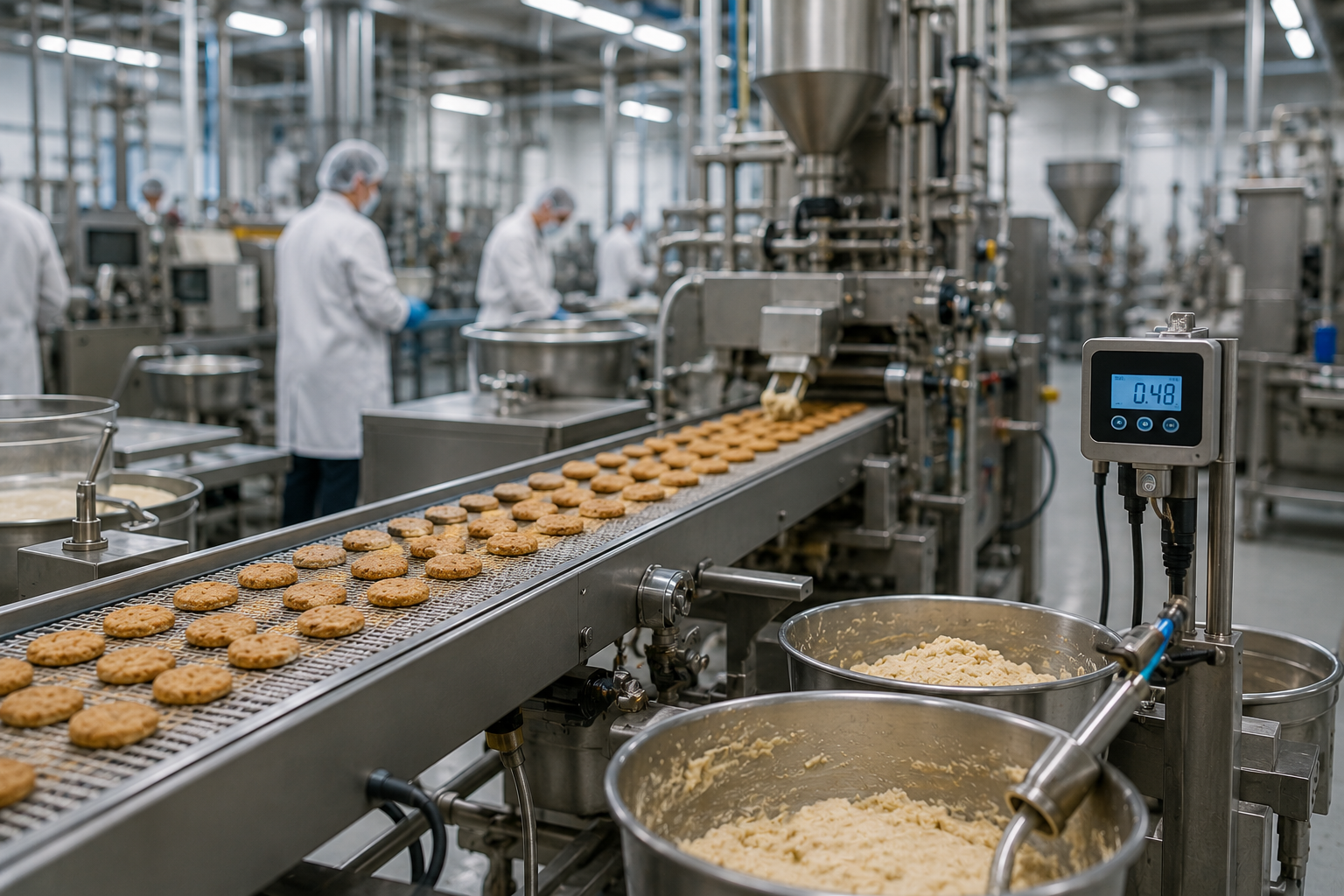
Don’t Wait Until The End: Why Water Activity Should Be Measured Throughout Food Processing
When food manufacturers think about water activity, they often think about the finished product. Measuring the final water activity is essential for confirming shelf-life and product stability, but it may not tell the whole food safety story.
Many products pass through high-moisture processing stages before they become shelf stable. Doughs, slurries, batters, fillings, and hydrated ingredient mixes can all have water activities high enough to support the growth of pathogenic bacteria if time and temperature are not properly controlled.
In some cases, that’s more than a quality concern.
Heat Doesn’t Always Remove the Risk
Cooking and baking are effective at destroying most vegetative bacteria, but some bacterial toxins, such as the enterotoxins produced by Staphylococcus aureus, are highly heat stable. If these toxins are produced during processing, they may remain active even after the bacteria themselves have been eliminated through a heat treatment.
The most effective strategy is to prevent toxin formation in the first place by controlling the conditions that allow bacteria to grow and produce toxin.
Water Activity Is a Key Process Parameter
Water activity measures the energy of water, which dictates if microorganisms can access the water for growth. By measuring water activity during intermediate processing steps, manufacturers can:
- Verify that formulations remain within validated process limits.
- Support HACCP hazard analyses and preventive controls.
- Establish safe hold times for doughs, slurries, and other work-in-process materials.
- Detect unexpected formulation or ingredient variability before it affects product safety.
- Strengthen process validation with objective, measurable data.
Rather than relying solely on end-product testing, manufacturers gain visibility into the conditions where microbial hazards can actually develop.
Supporting a Preventive Food Safety Culture
Modern food safety systems are built on prevention. Understanding the water activity of intermediate products allows manufacturers to make informed decisions about processing, storage, and production scheduling before risks become problems. This also helps prevent the waste and increased danger presented by rework.
Whether validating a new process, investigating production variability, or strengthening HACCP documentation, reliable water activity measurement of both high-moisture intermediate stages and final products provides valuable evidence that critical control measures are working as intended.
Reliable Measurements When They Matter Most
Novasina water activity instruments are designed to deliver fast, accurate, and repeatable measurements across a wide range of food products—from wet doughs and slurries to finished shelf-stable goods. By bringing water activity testing into the production process, not just the quality control laboratory, manufacturers can better understand their processes, support regulatory compliance, and strengthen preventive food safety programs.


